In February 2026, the ground of Mongolia is in a period of alternating freezing and thawing, where the snowmelt is accelerated. The surface stability of dust source areas has entered the most vulnerable stage of the year, which will determine the potential occurrence and impact range of spring dust weather.
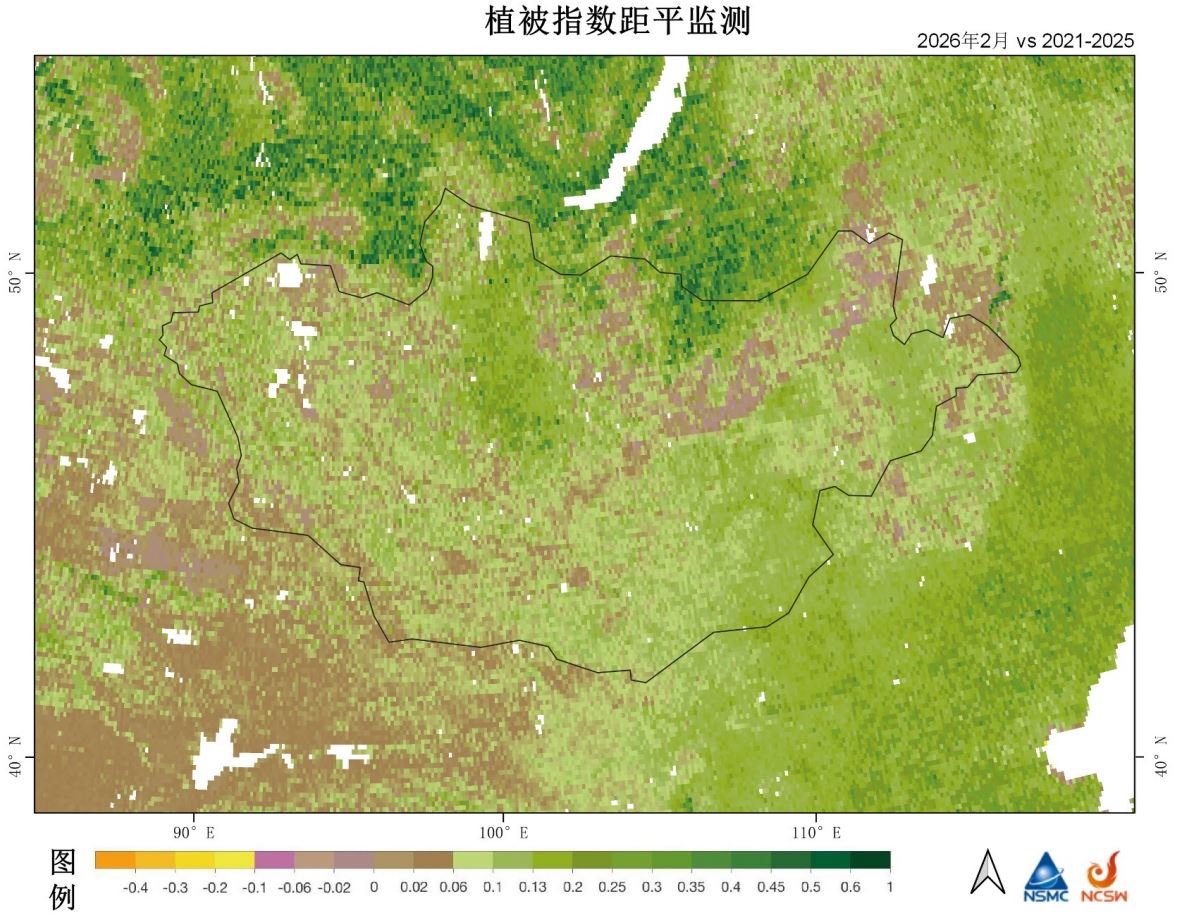
NDVI monitoring by satellite shows that compared with the same period in the past five years, the range of below-average vegetation growth in Mongolia in February has further expanded.
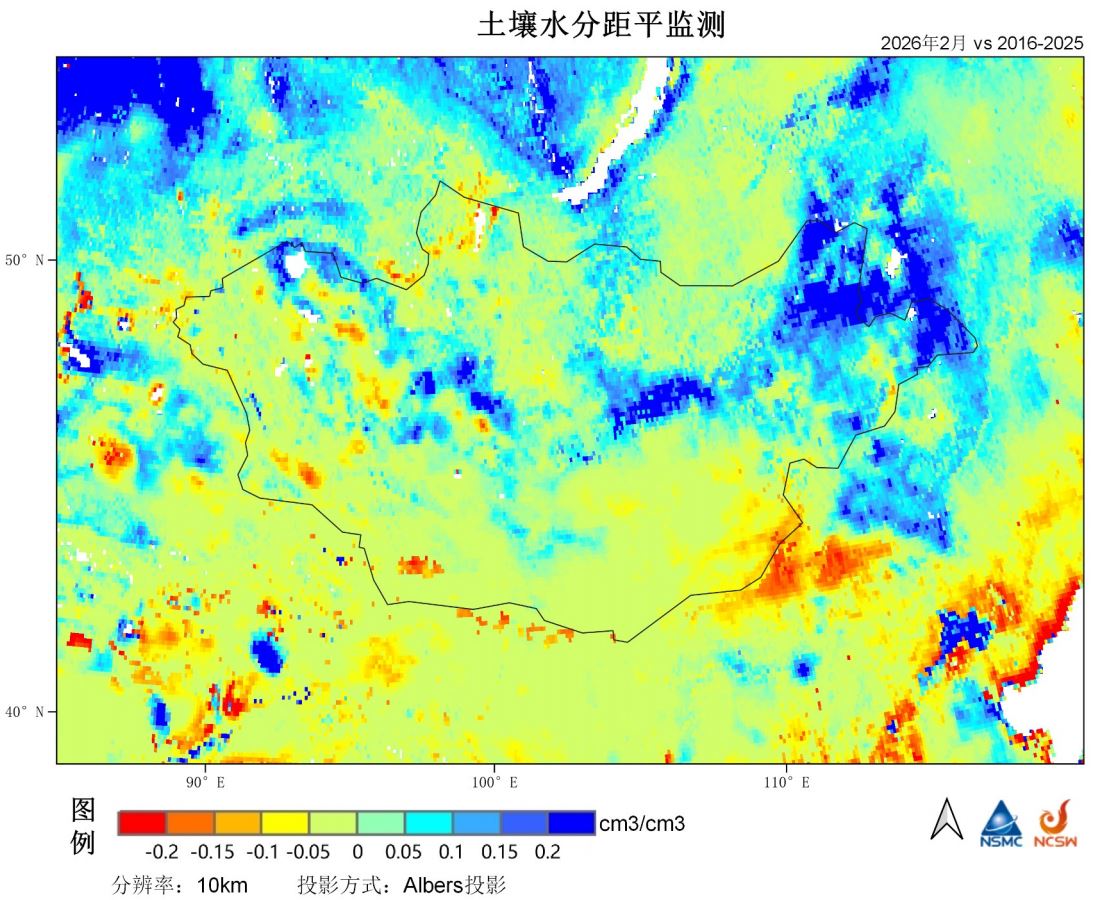
Soil moisture fusion monitoring by multi-source satellite shows significant changes in core sand source areas such as the southern Gobi Desert, with local soil moisture deviations exceeding 0.2cm3/cm3.
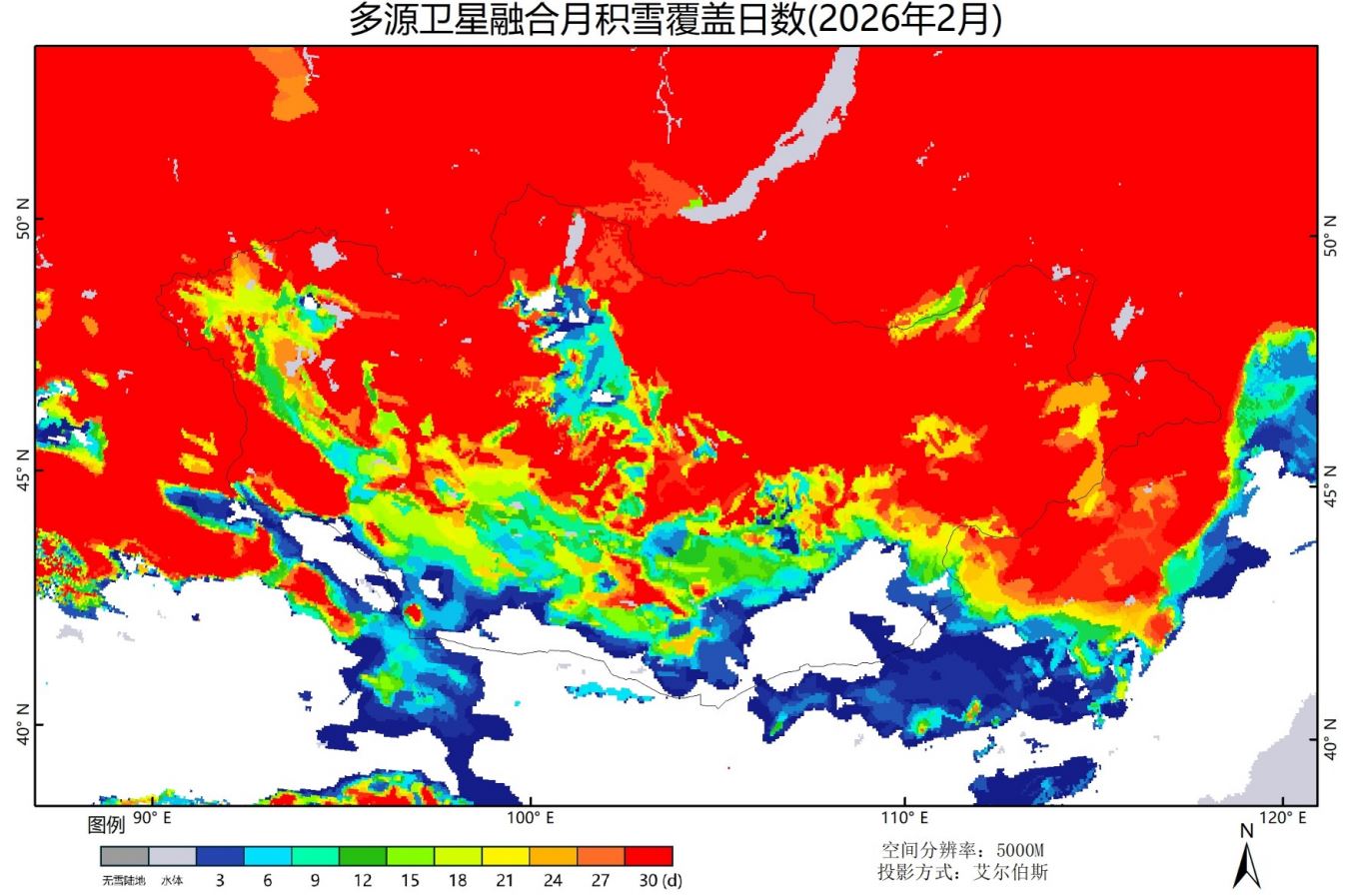
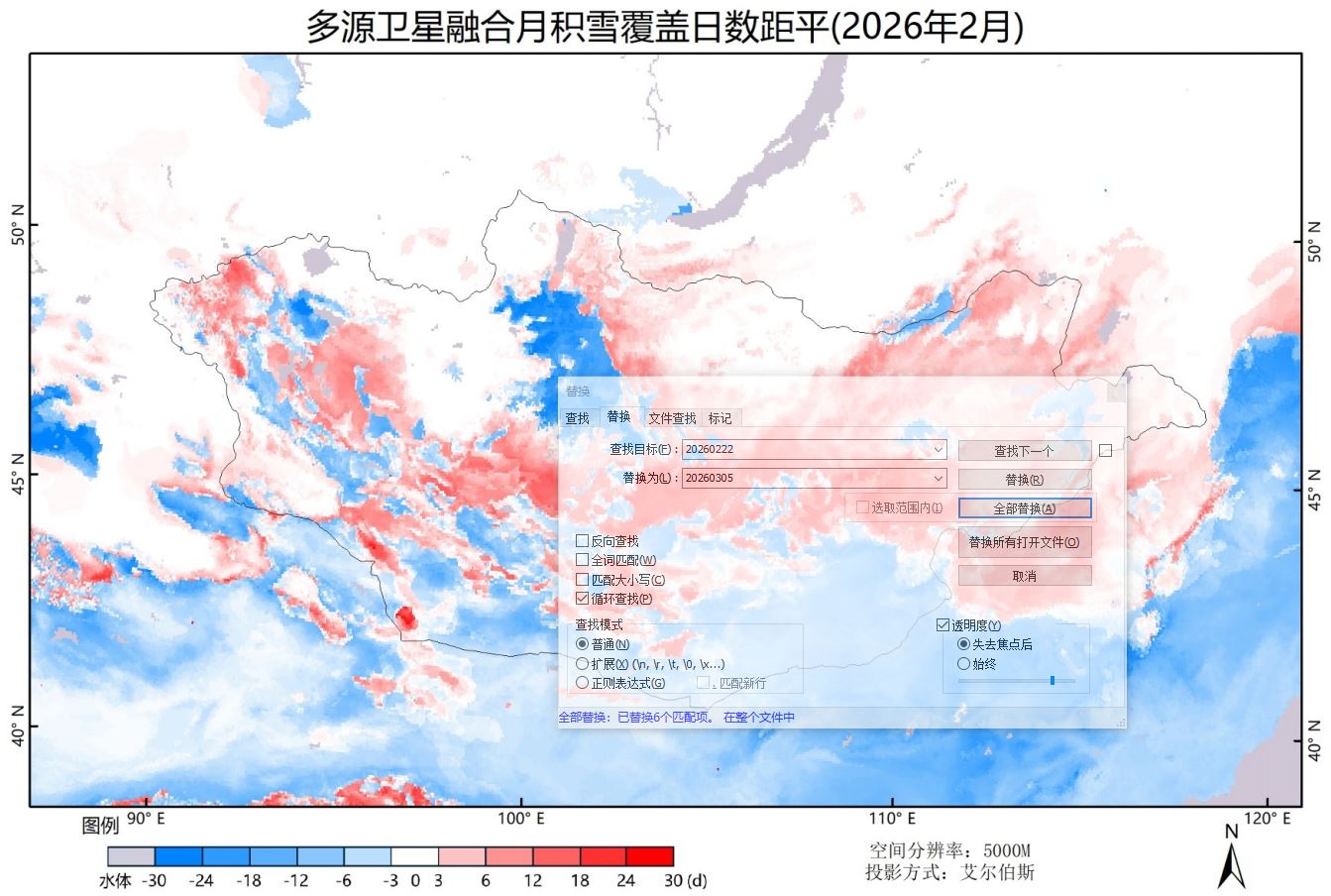
Snow cover days and anomaly monitoring by multi-source satellite shows the number of days with snow cover in northern and central-eastern Mongolia is significantly higher than the average for the same period from 2005 to 2024.